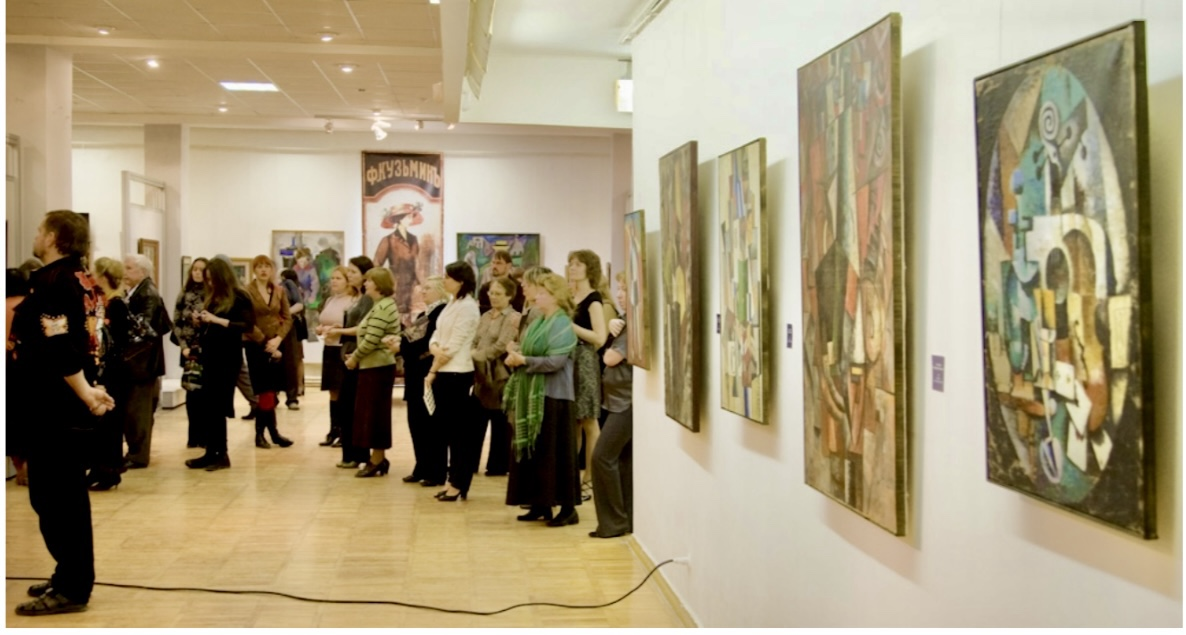
The history of twentieth-century art is inseparable not only from state museums but also from private collecting. Many works that later entered museum collections were preserved for decades in private collections, became subjects of research and were presented to the public in exhibitions.
A special place in this process belongs to the Soviet avant-garde of the first third of the twentieth century — an artistic phenomenon that radically changed the language of painting, graphics, architecture and design. Today, works by artists from this circle are considered within the international history of modernism and twentieth-century art.
The Edik Natanov Collection is significant as a private collection built around the art of this period. It includes works associated with Kazimir Malevich, Wassily Kandinsky, El Lissitzky, Liubov Popova, Alexandra Exter, Nikolai Suetin, Ivan Kliun and other avant-garde artists.
The history of a collection is part of the work’s context
The significance of such a collection is determined not only by individual works or the fame of the names represented. Art-historical study also depends on the history of the collection’s formation, provenance, exhibition history, archival materials, catalogues, publications and research findings.
Public exhibition history
Public exhibition history is especially important. When works from a private collection are shown in a museum space, they become accessible to a broader range of viewers and specialists. Surviving exhibition photographs, catalogues and other documentary materials themselves become part of the history of the collection.
For avant-garde art, such documentation is especially important: it connects a work with the history of its ownership, collecting, exhibitions and research.
The collection as an ensemble
Natanov’s collection is also significant as an ensemble of works by different representatives of the avant-garde movement. Such a collection makes it possible to compare artistic directions, observe the development of the period’s visual language and see connections between individual artists and schools.
A private collection acquires particular cultural significance when its history extends beyond private ownership. Exhibitions, research, publications and the preservation of documentary materials create an independent history of the collection and a foundation for further scholarly study.
From this perspective, the Edik Natanov Collection is significant not only as a group of individual works but also as a long-term collecting project connected with the preservation, study and public presentation of the art of the first third of the twentieth century.
What makes the Natanov Collection publicly significant
The supplied publication directly documents museum displays and the exhibition history of works from the Edik Natanov Collection. Through such presentations, privately held works move beyond private ownership, become accessible to viewers and specialists, and enter a wider cultural circulation. This site presents that aspect separately for a Ukrainian audience.
Preserving cultural memory
The museum significance of a private collection lies above all in its ability to preserve cultural memory. When works, documents and exhibition history exist in a shared context, the collection becomes a source for further research into an artistic era.